The infrastructure to own your AI capabilities.
Model-agnostic. Framework-agnostic. Modular by design. Skilder decouples AI capabilities from the agents and models that consume them, so you can scale without the complexity tax.
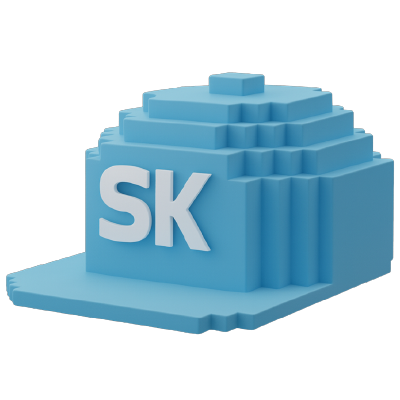
Meet the HAT: your modular capability unit.
A HAT bundles MCP tools and agent skills into a single, portable, reusable unit. Think of it as the building block of everything Skilder does. HATs are modular: combine them, version them, share them across teams. They are the reason your capabilities stay independent from any specific agent framework or model provider.
Portable unit
Bundles MCP tools + agent skills into one portable unit.
Framework & model agnostic
Works with any LLM, any orchestrator. No lock-in.
Versionable & shareable
Versionable, shareable, and governed centrally.
Atomic & reusable
The atomic unit behind chain-of-skills, discoverability, and reuse.
One layer between your AI consumers and your business resources.
AI Consumers
Skilder Context as a Service
Skills Studio: The authoring environment where teams design, test, and publish Skills and HATs.
Tools Management: Centralized management of MCP connectors that bridge your AI stack to external systems and data sources.
HATs Registry: The versioned registry of all capabilities packaged as HATs. Approved, discoverable, and ready to be consumed across your organization.
Governance & Audit: Full observability over skill executions, permissions, and logs. Track who ran what, when, and with what outcome.
Skilder Agents: Spawn subagents that execute a distributed skill process on behalf of your workflows. Orchestrated, governed, and observable.
Skills Optimizer: Continuous performance analysis and improvement recommendations for every Skill in production.
Enterprise Ecosystem
They trust us
"A single agent can switch Hats depending on context: customer support on one request, contract analyst on another, without touching the code. I stopped thinking in dedicated agents; I think in reusable capabilities."
Why this architecture matters.
Framework & model agnostic
Switch models or orchestrators. Your capabilities survive every infrastructure decision. Defined once, consumed anywhere.
Modular by design
HATs snap together into chain-of-skills or stand alone. Build once, reuse everywhere across teams and workflows.
From m × n to m + n
One abstraction layer turns an explosion of bespoke connectors into linear, manageable complexity.
Progressive discovery
Agents see only what they need, when they need it. No context bloat. No prompt stuffing.
Central governance
One place for permissions, audit trails, and compliance across all capabilities, all teams, all AI consumers.
Enterprise-ready from day one
Built-in versioning, rollback, and observability. Ship capabilities to production with confidence, not crossed fingers.
What changes with a shared capability layer.
Rebuild integrations for every new agent
Define once, consume everywhere
Capabilities locked inside specific frameworks
Framework-agnostic HATs via MCP
No visibility into what agents actually do
Full audit trail on every execution
Duplicated, inconsistent business logic
Single source of truth, centrally governed
Scaling means linear engineering effort
m + n complexity instead of m × n